

Use this personal capacity planning kit to see your real workload clearly and stop repeating the same overcommitment cycle. Spend about ten minutes a week on focused capacity planning - no more guessing.
See where your energy actually goes each week
Spot patterns before you hit burnout
Hold boundaries and walk back overcommitments with scripts
Decide what to drop, delegate, or delay next month.
You know you're overcommitted. You just don't know where to start.
You've tried blocking focus time. It gets interrupted. You've tried saying no. Then someone asks nicely and you say yes anyway. You've tried doing less. But the urgency always wins.
The problem isn't discipline. It's that you don't have a system for seeing what's actually happening to your capacity before you're already burnt out.
The Calm Capacity Kit is a 4‑week structured capacity planning reset that tracks energy (not tasks), documents boundaries held (not just broken), and turns patterns into decisions.
It's not a journal. It's not a planner. It's a decision tool.
What’s inside this capacity tracking kit:
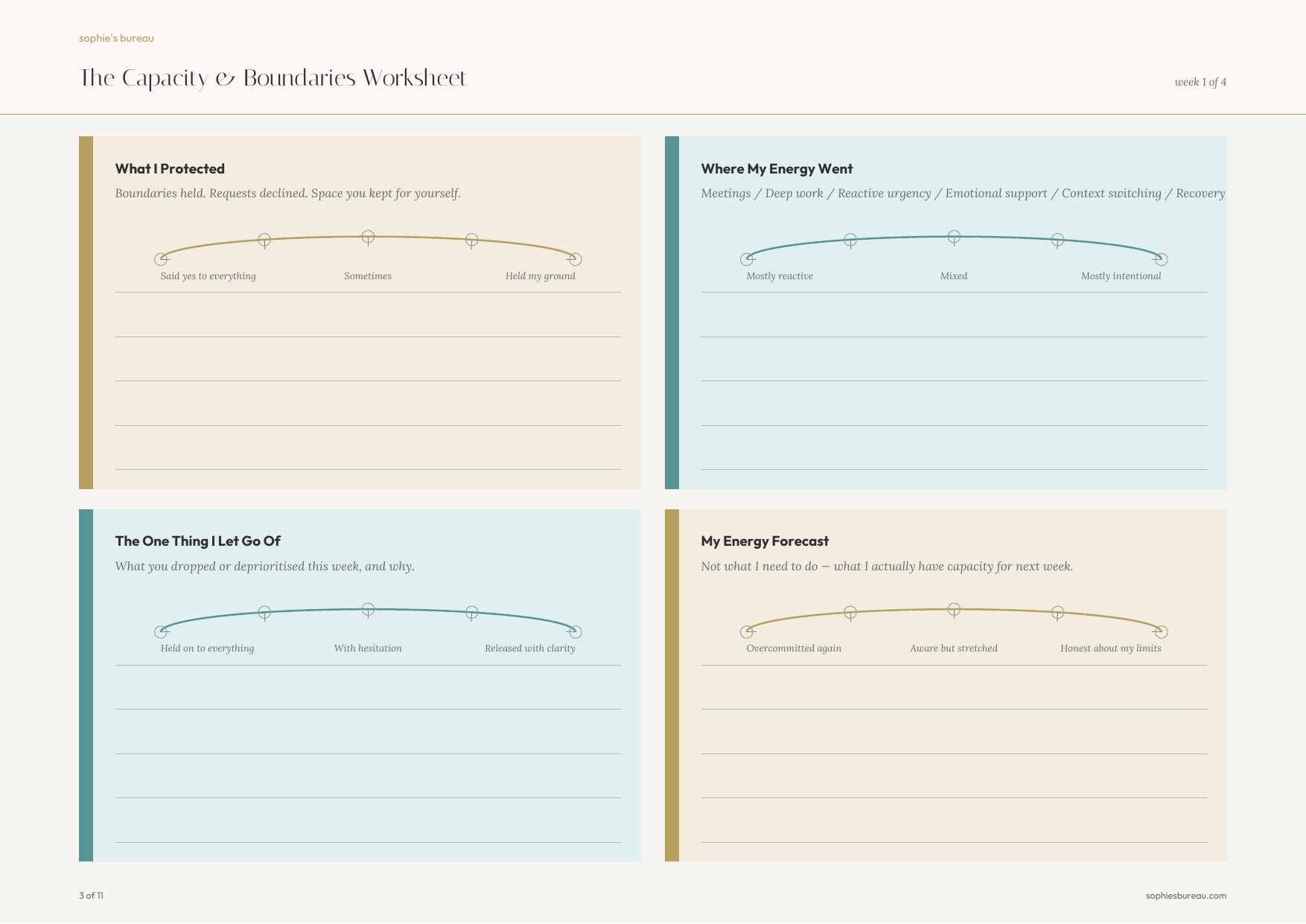
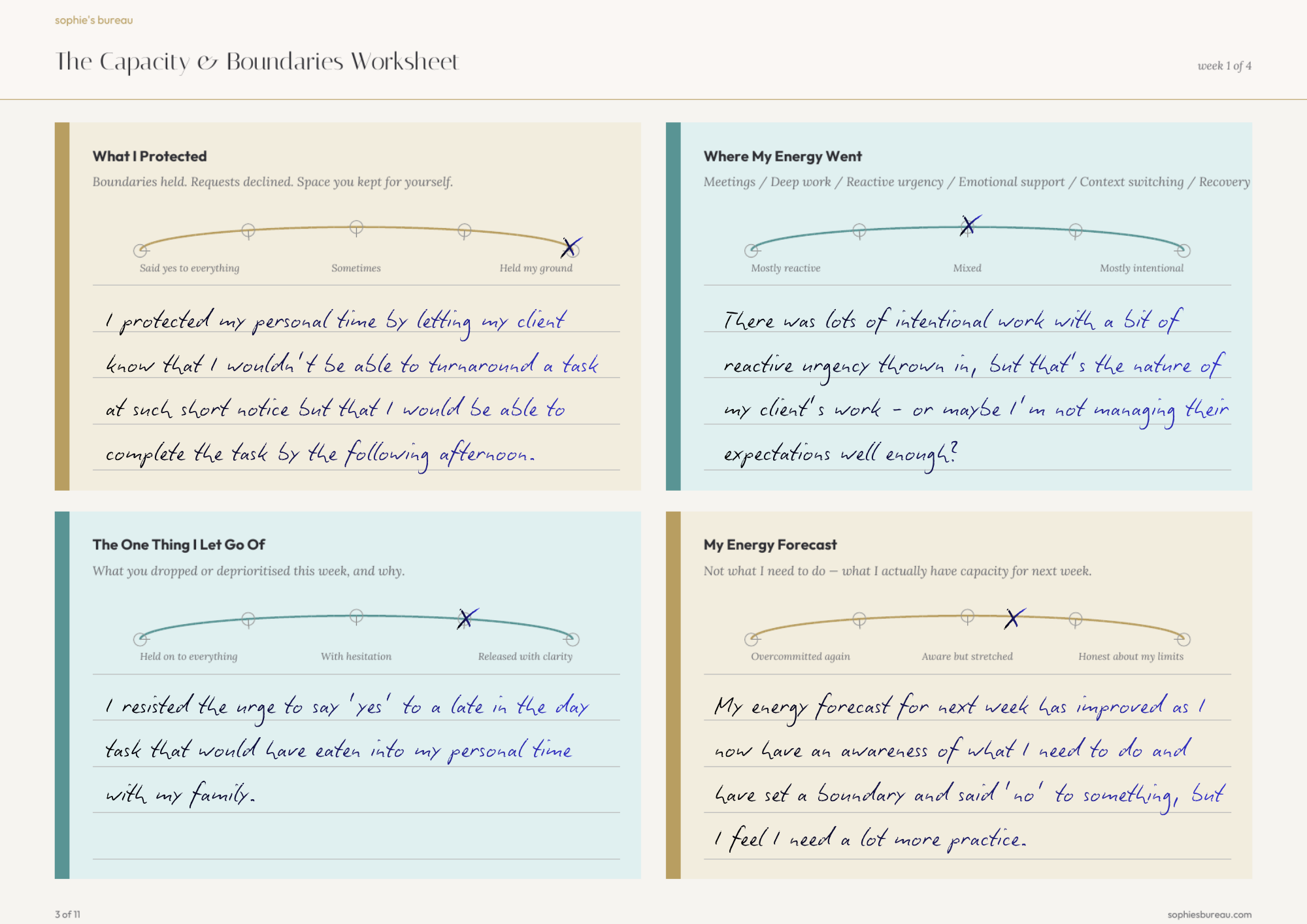
4 Weekly Worksheets Track what you protected, where your energy actually went, what you let go of, and what you can realistically handle next week. Takes 10 minutes.
Reflection Prompts Deeper questions about patterns, body signals, and what "overcommitted" actually feels like for you.
Monthly Capacity Review See the full month of capacity planning at a glance. Notice what repeated. Decide what changes.
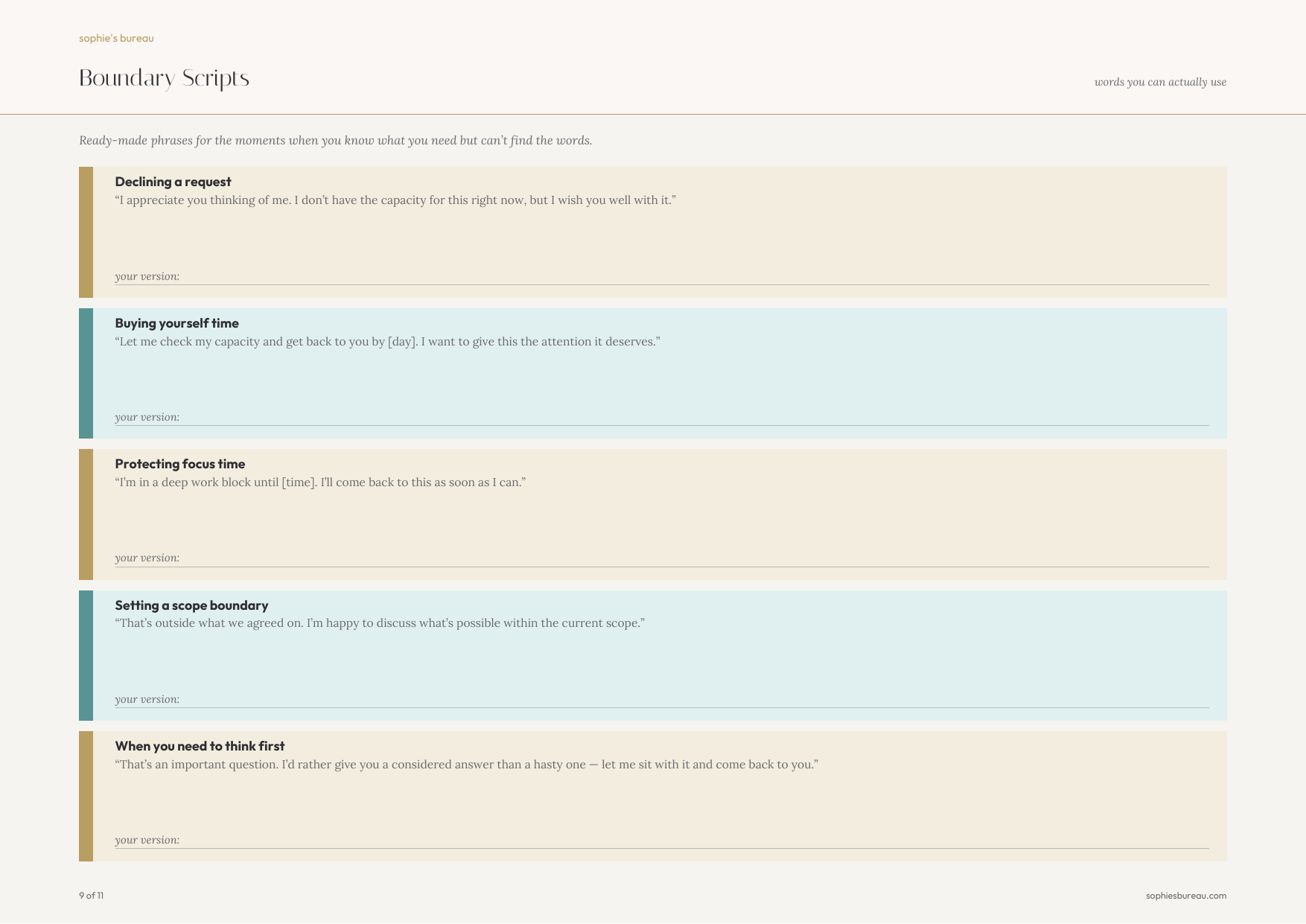
Boundary Scripts Ready-made phrases for declining requests, buying time, resetting expectations, and — critically — what to say when you've already said yes and need to walk it back.
What to do with this
Clear next steps when you see the same pattern three weeks in a row. No more reflection without action.
Used weekly, it becomes a light‑touch capacity planning habit you can reuse every month.
How the capacity planning system works:
Track → 10 minutes weekly. Four quadrants showing where your energy actually went versus where you thought it would go.
Review → 20 minutes monthly. See the pattern across all four weeks. Notice what repeated.
Decide → Use the scripts and act once. Drop something. Walk back a commitment. Say no to the next request.
This kit doesn't fix overcommitment.
It makes it visible, so you can choose what changes next.
If you see "overcommitted again" circled for three weeks in a row, you don't need more awareness. You need to act once.
This kit tells you when that moment is.
Who this is for:
This capacity toolkit is designed for overcommitted professionals and freelancers who keep ending up in the same burnout cycle.
People who take on more than they have capacity for, then feel guilty about struggling
Anyone who's tried productivity systems but keeps ending up in the same overwhelm cycle because there’s no capacity planning behind them
Consultants and freelancers managing invisible workload who need a realistic capacity planning view of their week
People who need permission to stop reflecting and start deciding
Who this isn't for:
People looking for time management tips
Anyone wanting a 90-day transformation program
People who need someone to tell them exactly what to do (this gives you the data, you make the call)
One thing to know before you buy:
This capacity planning kit won’t tell you exactly what to cut, who to say no to, or how to restructure your life. What it will do is show you where the pattern is so you can act on it.
If you want someone to fix it for you, this isn't it. If you want to finally stop watching yourself burn out in real time, this will help.
You will receive
1 × 12‑page A4 PDF (printable). Lines for handwriting. Print at home or at a print shop.
1 x 11‑page A4 fillable PDF. Type directly into the document. Works with iPad/GoodNotes, Adobe Reader, Notability, or any PDF annotation app.
Usage notes, including how to repeat the 4‑week reset.
Reprint or reuse every month - no expiry.
FAQs:
-
The Calm Capacity Kit is a personal capacity planning tool designed as a 4-week reset. Unlike traditional planners that organise tasks, this capacity planner tracks where your energy actually goes each week and shows you patterns in your overcommitment before burnout hits. It combines weekly capacity tracking worksheets, boundary scripts, and a monthly capacity review. Think of it as a diagnostic capacity planning system that tells you when to stop reflecting and start acting.
-
About ten minutes for the weekly capacity tracking worksheet. You'll record what you protected, where energy actually went, what you let go of, and your realistic capacity forecast for next week. The reflection prompts and monthly capacity review are optional extras. Most people spend 10-15 minutes on weekly capacity planning, then 20 minutes at month-end reviewing patterns. It's designed to be a light-touch capacity planning habit you can reuse monthly.
-
Yes. While it's structured as a 4-week reset, many people use it as an ongoing monthly capacity planning tool. Each month you track your real workload, spot overcommitment patterns early, and adjust before hitting burnout. Some people run it quarterly as a capacity planning check-in, others return to it whenever they notice they've slipped back into overcommitment cycles. The boundary scripts and monthly review format work just as well for repeated use.
-
Both versions are included. The print version has lines for handwriting and works well for people who process their capacity planning better with pen and paper. The fillable PDF has clean text areas for typing — better for digital capacity tracking workflows or tablet use. Most people print the weekly worksheets for quick capacity planning sessions and keep the boundary scripts digitally for easy reference when they need them.
-
Most capacity planning tools are designed for project managers allocating team resources. This is personal capacity planning for individuals managing invisible workload — emotional labour, context switching, reactive urgency, mental load, and boundary violations. It tracks energy and real capacity, not billable hours. It documents boundaries you actually held (not just ones you broke). And unlike most capacity planning or self-awareness tools, it tells you exactly when to stop tracking and start making decisions about what to drop, delegate, or delay.